8 Critical Mistakes Dealers Make During Showroom Redesign Projects
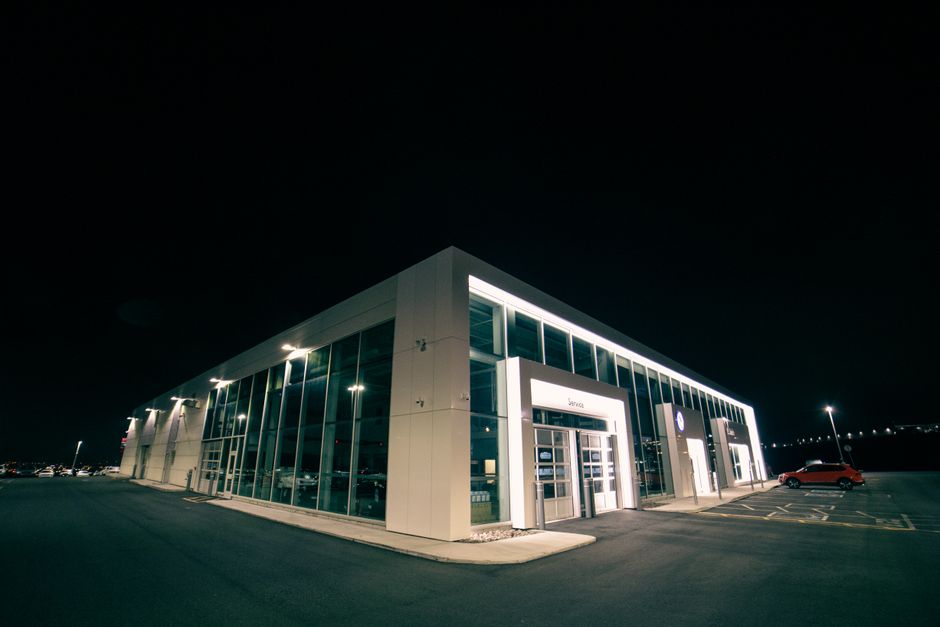
The first modern car showroom opened in Berlin in 1928, and it looked nothing like what you'd recognize today. Glass walls, polished floors, dramatic lighting on the vehicles themselves. Within a decade, dealerships across America were tearing out their old sales offices to copy the formula. Most of them got it wrong. They treated showroom redesign like a simple construction project instead of a strategic business investment.
Nearly a century later, dealers are still making the same fundamental mistakes.
You know that moment when a $400,000 showroom redesign project finally wraps up and your sales team can't figure out where to write an RO? Or the new customer lounge looks sharp but your service advisors are walking 80 extra feet per day to grab paperwork because nobody consulted your fixed ops workflow? These aren't construction problems. They're dealership operations problems wearing a hard hat.
Here's the honest truth: most showroom redesigns fail because dealers treat architects and contractors like the decision-makers instead of translating their operational reality into the design brief. You wouldn't let a customer's mechanic decide your parts inventory mix. Don't let a GC decide your showroom layout without running it through your sales team, service director, and finance manager first.
Mistake #1: Designing for Aesthetics Instead of Traffic Flow
A beautiful showroom is worthless if nobody can figure out how to move through it.
The classic mistake: you hire a designer who creates a stunning open floor plan with the newest vehicles positioned in dramatic light wells, chrome fixtures, polished concrete, the whole magazine-cover treatment. Then opening day arrives and you realize your sales team has nowhere to sit, no privacy for ups and closes, and customers are wandering straight past your premium inventory because the sightlines don't naturally guide them there.
The better approach starts with mapping your actual traffic pattern. Where do customers enter? Where do they instinctively look first? What's the natural progression from initial interest to a test drive conversation? This isn't guesswork. Dealerships that nail showroom redesigns typically spend weeks observing customer flow before a single design sketch gets drawn.
Consider a scenario where you're redesigning a 12,000-square-foot dealership showroom. Your prime floor space should funnel customers past your 3-5 highest-grossing inventory positions first, regardless of how symmetrical or balanced the layout looks on a floor plan. If your 2024 truck with $8,500 front-end gross is buried in a corner because the designer wanted the space to "feel open," you've made an expensive mistake.
The fix is simple but requires discipline: involve your sales manager and top producer in the design review. Walk the floor plan with them. Ask them to simulate a customer walk. If they're confused about where to take someone, the customer will be too.
Mistake #2: Ignoring Service Bay Integration
Here's where a lot of dealers stumble.
You focus so hard on impressing customers who are looking at new inventory that you completely overlook how the showroom redesign affects your service operations. The walls move. The customer lounge gets relocated. Suddenly your service director is asking why the waiting area is now 150 feet from the service bay, or why the new window design means he can't see vehicles coming through the door from his desk anymore.
Service bays and showroom space don't operate in a vacuum. They're connected by workflow, sight lines, and daily operational efficiency. A facility upgrade that looks fantastic but adds 20 minutes a day of walking around for your service team is costing you money in labor efficiency even if you can't see it on a P&L statement.
Before your designer submits a final plan, walk it with your service director. Ask specific questions. Where will parts staging happen? Can the service director see incoming vehicles clearly? Is the customer lounge positioned so that advisors can check on customers without leaving their workspace? Can a tech easily hand off a vehicle from the service bay to the showroom if a customer wants to see their car cleaned up before pickup?
The best dealership facilities treat the showroom and service area as one integrated space, not two separate kingdoms. Your customer doesn't see a wall between them. Neither should your operations.
Mistake #3: Under-investing in ADA Compliance and Then Scrambling
ADA compliance isn't a checkbox item. It's a legal requirement. Yet it's astonishing how many facility upgrades get approved without a thorough review of accessibility standards, and then months into construction you realize you need to widen doorways, add ramps, relocate restrooms, or install additional accessible parking.
This becomes expensive fast. A retrofit parking lot layout can run $15,000 to $40,000 depending on your region and current conditions. Adding an accessible restroom or modifying an existing one during construction can easily hit $8,000 to $15,000. None of this should be a surprise during project execution.
The right move is to have an ADA compliance specialist review your preliminary design before you finalize construction documents. This costs a few hundred dollars and can save you thousands in change orders and delays. They'll identify issues like:
- Parking lot slope and accessible space positioning
- Door width and threshold accessibility
- Accessible route from parking to entrance
- Service counter height and approach clearance
- Restroom layout and grab bar placement
- Customer lounge seating and aisle width
Many dealers discover these issues after the showroom is already under construction, which means expensive change orders, schedule delays, and frustrated customers who can't access parts of your facility while you're fixing compliance issues.
Mistake #4: Creating a Showroom That Doesn't Match Your Brand Reality
You're a volume Honda and Hyundai store. Your gross averages $2,800 per unit on new cars. Your customers are practical, price-conscious, trade in older vehicles, and they move fast through the buying process. So why are you building a showroom that looks like a luxury dealership with marble floors, accent lighting on each vehicle, and a lounge that seats 30 people?
This is a real problem at real dealerships. The showroom redesign gets handed to a designer who creates something that looks beautiful in photos but doesn't reflect who your actual customer is or how they actually buy.
Here's the better framework: define your customer demographic first, then design around their experience.
If you're selling primarily to young families and practical buyers, your showroom should emphasize accessibility, transparency, and efficiency. A clean floor layout, digital displays showing specs and pricing upfront, bright lighting, fast checkout areas. Your customer lounge doesn't need to be a five-star hotel lobby. It should be comfortable, modern, with good wifi and maybe a coffee station. That's what your customer values.
If you're a luxury store or selling high-line brands, then yes, invest in premium finishes, selective lighting, private consultation areas, and an elevated lounge experience.
The point is this: your showroom design should reinforce your brand and match your customer's expectations. If it doesn't align, you've built something expensive that confuses people about who you are.
Mistake #5: Not Planning for Digital Integration
You're designing a showroom in 2024 or 2025, and you're still treating the space like it needs to function without technology.
Digital displays, vehicle information systems, virtual test drive configurations, payment kiosks, customer communication boards, and integrated signage aren't optional anymore. They're part of how modern customers expect to interact with a dealership. Yet many showroom redesigns get built, the contractors leave, and then the tech team scrambles to retrofit electrical systems, network infrastructure, and display mounts because nobody planned for it during the design phase.
This is exactly the kind of workflow coordination challenge that platform tools help solve. When your design team, operations team, and IT team all have visibility into the same project timeline and requirements, these integration points don't get missed. You coordinate the display locations during construction instead of after.
Before your design gets locked down, involve your IT person and your marketing director. Ask them:
- What digital displays do we need and where?
- What network infrastructure has to be run during construction?
- Where do we need digital signage for inventory, pricing, or wayfinding?
- What charging ports or customer-facing tech should be built into the lounge?
- How do we show vehicles in 360-degree or virtual environments?
Plan for electrical needs during the construction phase. Don't try to add it later.
Mistake #6: Dealership Signage That Confuses Instead of Guides
Walk through most dealership facilities and look at the signage. It's often an afterthought. Parking area signs, restroom labels, "Customer Lounge," service bay door numbers that don't match your RO system, directional signage that points customers to departments they don't understand.
Your signage should work as a navigation system for customers who have never been to your dealership before. They should know exactly where to go without asking. Service waiting area. Customer lounge. Restrooms. New vehicle inventory. Used inventory. Finance office. Parts counter.
The mistake most dealers make is treating signage as decoration rather than functionality. You end up with beautiful branded signs that are positioned poorly, inconsistent in style, or placed too high or too low to be useful.
Here's a practical step: during your facility upgrade, create a simple wayfinding plan. Map where a first-time customer should be able to navigate without verbal directions. Make sure your signage is visible, consistent, clear, and positioned at eye level or in natural sightline points.
And be honest about this: that fancy custom sign budget you allocated? You don't need premium finishes everywhere. You need effective, durable signage that lasts and communicates. Standard-grade brushed aluminum or powder-coated steel with vinyl lettering works perfectly fine and costs a fraction of what custom fabrication runs.
Mistake #7: Skipping the Customer Lounge in the Budget
Money gets tight during construction. The budget balloons. Something has to give. So the customer lounge gets scaled back. Fewer chairs, cheaper finishes, basic coffee station instead of the planned setup.
This is backwards logic.
Your customer lounge is one of the highest-ROI spaces in your facility. Comfortable, engaged customers waiting for their vehicle to be serviced are more likely to approve recommended maintenance. They're not stressing about being rushed. They're not feeling abandoned. They're relaxed, maybe grabbing coffee and checking email, and then when your service advisor comes to discuss that timing belt recommendation, they're in a better mental place to make a decision.
Don't cheap out on the lounge. Invest in it properly. Good seating, adequate lighting, functional temperature control, reliable wifi, phone charging stations, and a simple beverage station (coffee, water, maybe sodas). The total cost to furnish and outfit a nice customer lounge for a mid-sized dealership runs $8,000 to $15,000. That's a rounding error compared to your total facility upgrade budget, and it directly impacts CSI and customer satisfaction.
If you're running short on budget, cut something else. Not the lounge.
Mistake #8: Not Involving Your Team Until Opening Day
This might be the most common mistake of all.
The GM and owner have vision for the redesign. They meet with architects and contractors. The design gets approved. Construction happens. And your sales team, service advisors, parts manager, and office staff find out what the new facility looks like on opening day.
Then there's chaos. People can't find things. Workflows don't match the new layout. Computers and phones are in weird spots. The service bay isn't positioned the way advisors need it to be.
Your team doesn't need to be in design meetings. But they need to review the preliminary plan and walk the space before construction starts. Ask them directly: what concerns do you have about this layout? What's missing? What's going to make your job harder?
Take their feedback seriously. These are the people who spend eight hours a day in this facility. If they see a problem, it's probably real.
The Right Framework: Operational Design First, Aesthetics Second
A showroom redesign should solve operational problems and support your business objectives. The aesthetics should follow from that clarity, not the other way around.
Here's the sequence that works:
- Define your objectives. Are you increasing customer traffic? Improving CSI? Modernizing the space? Creating better workflow for service? Be specific.
- Map your current workflow and identify pain points. Where are the friction areas in your customer journey? Where do your teams waste time or struggle?
- Brief the designer with those objectives and workflow maps, not just mood boards and Pinterest images.
- Have the designer create a preliminary floor plan that solves your operational challenges.
- Walk that plan with your sales team, service director, parts manager, and office staff.
- Get an ADA compliance review before design is finalized.
- Coordinate IT and technology integration into the construction documents.
- Then, and only then, refine the aesthetics around the operational skeleton.
This approach takes longer upfront. But it prevents expensive mistakes and ensures you actually use the space the way you intended.
A $400,000 showroom redesign that improves your facility upgrade's functionality and customer experience is money well spent. One that looks great but creates operational headaches is just an expensive decoration. The difference is planning and discipline.
Your team knows what works and what doesn't in your current space. Ask them. Your customers show you through their behavior what they need. Watch them. And build a facility that supports both.