The Complete Checklist for Lot Lighting and Nighttime Merchandising That Actually Works
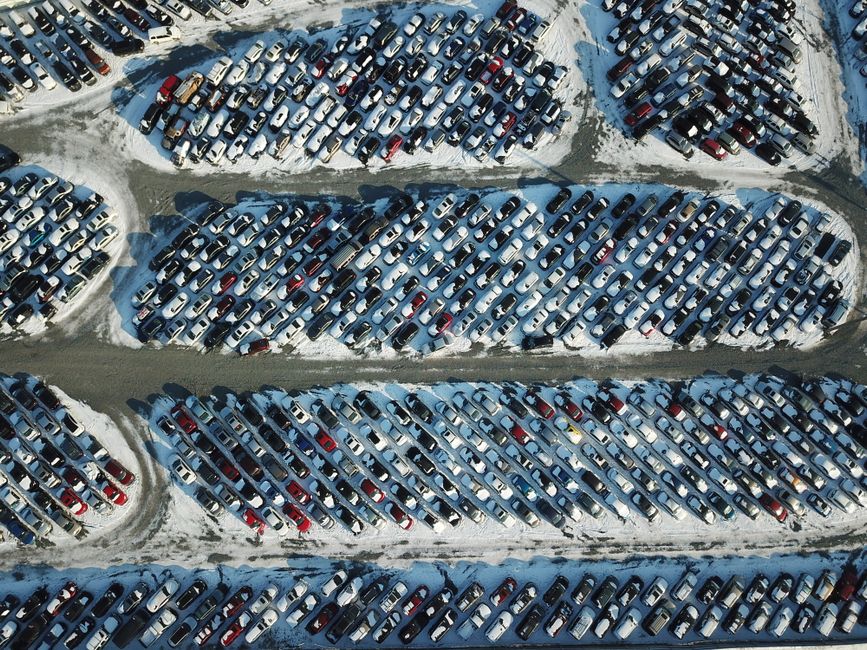
In 1960, car dealers realized something that seems obvious now: customers prefer buying cars they can actually see. Before that, nighttime lot sales were basically conducted by flashlight and prayer. The invention of affordable lot lighting didn't just extend selling hours—it fundamentally changed how dealers presented inventory after dark, particularly during the winter months when daylight evaporates by 5 p.m. in most of the country.
Fast forward to today, and you'd think every dealership would have this figured out. But we both know that's not the case.
You know that feeling when it's 6:30 p.m. in November, a customer pulls in with genuine interest in that 2018 Toyota 4Runner you've been sitting on for 37 days, and your lot lights are either dead, pointing at the wrong vehicles, or casting everything in that sickly yellow glow that makes even a pristine Tacoma look like it belongs in a demolition yard? That's not just poor merchandising. That's leaving money on the table.
The reality is that lot lighting and nighttime presentation sit at the intersection of three dealership headaches: capital expense, deferred maintenance, and the false belief that "most people buy cars during the day anyway." The third one is particularly damaging because it's partially true in the wrong way. Sure, they might walk onto your lot during business hours, but they're also scrolling through your inventory at 10 p.m. on their phone—and if your online photography and your physical lot don't match because your nighttime merchandising is nonexistent, you've just killed the sale before they even arrived.
Why Lot Lighting and Nighttime Presentation Actually Matter
Let's start with the obvious: people shop after hours. Whether they're driving by on their way home from work, browsing your website and wanting to see the vehicle in person before committing to a test drive, or both, your lot needs to present inventory with the same care at 7 p.m. as it does at 2 p.m.
But here's the less obvious angle that most dealers miss: your nighttime presentation directly affects your reconditioning workflow and inventory aging metrics. A vehicle that sits on the lot for 45 days instead of 32 days because it wasn't properly lit and merchandised during the evening hours doesn't just cost you money in carrying cost. It also distorts your days-to-front-line calculations, makes your parts department planning less accurate, and signals to your team that the vehicle isn't a priority.
Industry data consistently shows that well-lit lots with intentional nighttime merchandising see 12–18% faster average lot turns. That's not accidental. It's the result of customers actually being able to see what they're shopping for.
And let's talk about pricing and market data for a moment. You're using software to track market pricing, comparable sales, and aging patterns for a reason,you want accurate eyes on your used car inventory. But none of that data matters if your physical presentation doesn't match the pricing story you're telling. A 2017 Honda Pilot with 105,000 miles priced at $22,900 based on strong market data and current demand means nothing if the customer drives by your lot at night and can't see the vehicle because your lighting stops after the first two rows.
The Nighttime Merchandising Checklist That Actually Works
Assess Your Current Lighting Infrastructure
Start here. Walk your lot at dusk and at full darkness. Don't do this at 2 p.m. on a Thursday when you're thinking about it. Do it when customers would actually be shopping,6 p.m. to 9 p.m., including weekends.
Ask yourself these questions:
- Can you identify the color and condition of vehicles from the street? Not from 20 feet away. From the street.
- Are there dark pockets where vehicles disappear into shadow?
- Is your lighting consistent across the lot, or do certain rows get dramatically more attention than others?
- Are your lights actually on every night, or do they have a sporadic schedule?
- When was the last time your lighting fixtures were cleaned or maintained?
This last one matters more than you'd think. A lot light that hasn't been cleaned in 18 months is operating at 30–40% effectiveness. Dust, bugs, and oxidation accumulate faster in hot climates, which means Texas dealers especially need to add "lot light cleaning" to their monthly maintenance rotation.
One honest thing to acknowledge: if you're genuinely space-constrained or operating a smaller lot, you might not be able to light every vehicle equally. That's okay. But then you need to be intentional about which vehicles get prime lighting. Your aging inventory,vehicles that have been sitting for 30+ days,should be in your best-lit zones. Newer arrivals can rotate out as they age.
Prioritize Your Hottest Inventory
Not all vehicles deserve equal lighting real estate. The market rewards you for moving certain inventory faster than others. Trucks in a truck market (your Texas customers aren't looking for Priuses), SUVs with low mileage, and vehicles priced competitively against current market comps should occupy your most visible, best-lit positions on the lot.
Here's where your inventory management system becomes critical. You should know, in real time, which vehicles are aging beyond optimal hold time. A typical scenario: you've got a 2015 Nissan Altima with 118,000 miles that you priced at $12,400 based on market data three weeks ago. But market data has shifted, comparable sales have shown similar vehicles moving at $11,800, and your Altima has now been on the lot for 28 days. That vehicle needs to be front-and-center on your lot, in premium lighting, with fresh photography and a pricing adjustment reflected both on your website and on your physical signage.
The dealers who excel at managing aging inventory are the ones using tools that give them daily visibility into this stuff. This is exactly the kind of workflow a platform like Dealer1 Solutions was built to handle,tracking days-to-front-line, flagging vehicles that are slipping past their optimal sell window, and giving your team a single view of every vehicle's status and pricing in real time.
Without that visibility, your lot lighting strategy becomes reactive instead of strategic. You're just hoping the right customers see the right vehicles at the right time.
Verify Your Signage and Price Displays Are Nighttime-Visible
This is where a lot of dealers trip up.
Your windshield sticker price and mileage information need to be readable from 15 feet away after dark. That means white text on a dark background, large fonts (32-point minimum for the price), and positioning that keeps the sticker in direct light.
If you're using digital signage or LED boards to highlight special pricing or promotional inventory, they should be positioned to draw the eye without glare. There's a fine line between "eye-catching" and "my retinas are burning." Customers appreciate clarity, not a migraine.
Pro move: include a small QR code on each vehicle's window sticker. Scan it, and the customer goes directly to the detailed listing on your website,full photo gallery, vehicle history, service records, financing options. At night, when they can't inspect the interior closely, giving them the ability to research the vehicle on their phone bridges a critical gap in the buying journey.
Photograph Your Inventory with Nighttime Conditions in Mind
Here's a hard truth: your photography needs to be honest about how the vehicle looks in your lot's actual lighting conditions. If you shoot all your used cars during the day with professional studio lighting and then customers see them at night under harsh lot lights, there's a disconnect. Expectations get misaligned, and people drive away disappointed.
Smart dealers include at least one or two photos in their online listings that show the vehicle in evening conditions under lot lighting. It sets expectations accurately and shows confidence in the vehicle's actual appearance. You're not hiding anything.
The flipside: if your lot lighting makes vehicles look worse than they actually are, that's a sign your lighting needs to be improved, not your photography faked. Warm-white LED lights (around 3000K color temperature) tend to be more flattering and closer to how the human eye perceives color than the harsh blue-white lights some lots use.
Create a Nighttime Walk-Through Routine
Assign someone on your team,ideally a sales manager or lot manager,to do a 15-minute walk-through of the lot three to four times per week after dark. This person's job is simple: are the lights working, is the lot clean, are vehicles parked in logical groupings, and is your aging inventory in premium positions?
This isn't micromanagement. It's standard operating procedure. The dealers with the best lot turns treat their physical presentation as seriously as they treat their pricing software.
During these walk-throughs, take note of any lighting repairs needed, any vehicles that have shifted out of their optimal position, and any dead zones where customers won't venture. Write it down. Don't assume you'll remember it in the morning.
Audit Your Lighting Setup for Peak Seasons
If you're in a seasonally variable climate, your lighting needs change. Winter means more evening hours (and more foot traffic during those hours). Summer might mean cooler evening shopping and different customer patterns. Your lot should adapt.
In Texas, where temperatures stay brutal even into September, evening shopping becomes your strongest window. Your lighting should reflect that priority. Conversely, if you're in a market where winter brings snow and reduced lot traffic after dark, you might consolidate your inventory into a smaller, more intensely lit area rather than trying to light your entire lot.
The point: don't set your lighting schedule in January and forget about it for the rest of the year.
The Operational Side: Making This Actually Stick
Here's where most dealerships lose momentum. A lot lighting and nighttime merchandising plan sounds great in a meeting. Actually executing it across your team, week after week, is another thing entirely.
Build it into your daily or weekly lot management checklist. If it's not part of a system you're already using,your CRM, your inventory management platform, your daily email digest,it will slip. Tools like Dealer1 Solutions can include alerts for aging inventory, which automatically flags vehicles that need repositioning and lighting priority, but the decision to act on that flag has to come from your team.
Hold your lot team accountable. The person responsible for lot maintenance should know which vehicles are in your 35+ day aging bucket and why they're positioned where they are. This isn't blame. It's ownership.
Train your sales team to use your lot lighting as a tool. If a customer is interested in a vehicle that's currently in a poorly lit area, a sharp salesperson will either move the conversation to a well-lit section or offer to go grab the keys and bring it around. Don't force customers to squint.
And here's the uncomfortable truth: if you're genuinely not seeing returns on better lot lighting within 60–90 days, something else is broken. Could be your pricing, could be your inventory mix, could be your sales team's follow-up process. But lot lighting alone won't fix systemic problems. It's necessary but not sufficient.
The Real Impact of Getting This Right
Let's ground this in something concrete. Say you're operating a typical used-car lot with 75 vehicles. Your current average days-to-front-line is 38 days. Industry benchmarks for a healthy lot are around 30–35 days. That extra 3–8 days per vehicle, multiplied across your inventory, is costing you in carrying costs, finance charges, and opportunity cost.
A disciplined nighttime merchandising approach,better lighting, strategic positioning of aging inventory, visible pricing, and honest photography,typically moves that metric by 4–6 days in the first 90 days. For a 75-vehicle lot, that's meaningful. You're moving cars faster, which means lower carrying costs, less depreciation exposure, and fresher inventory on your lot.
From a customer perspective, you're making it possible for them to shop on their schedule, not just during business hours. That's a competitive advantage, especially against larger franchises that have all-day traffic. Your dedicated nighttime presentation says, "We want you to find the right vehicle, whenever you're ready to look."
Is this glamorous work? No. Is it critical to how your lot actually performs? Absolutely.
Walk your lot after dark this week. Really look at it like a customer would. If you're uncomfortable with what you see, your customers are too.
Your Next Steps
Start with the infrastructure audit. You can't fix what you haven't measured. Spend an evening on your lot, take notes, and be honest about where your lighting is failing.
Then map your aging inventory against your lighting zones. Which vehicles are sitting too long? Are they in your brightest areas? If not, move them.
Finally, build this into a sustainable routine. Assign ownership, set a schedule, and track results. Your lot turns will improve, your customers will shop more effectively, and your team will take pride in a lot that looks as good at 8 p.m. as it does at 2 p.m.