Timing Belt vs. Timing Chain: What Your Mechanic Wishes You Knew
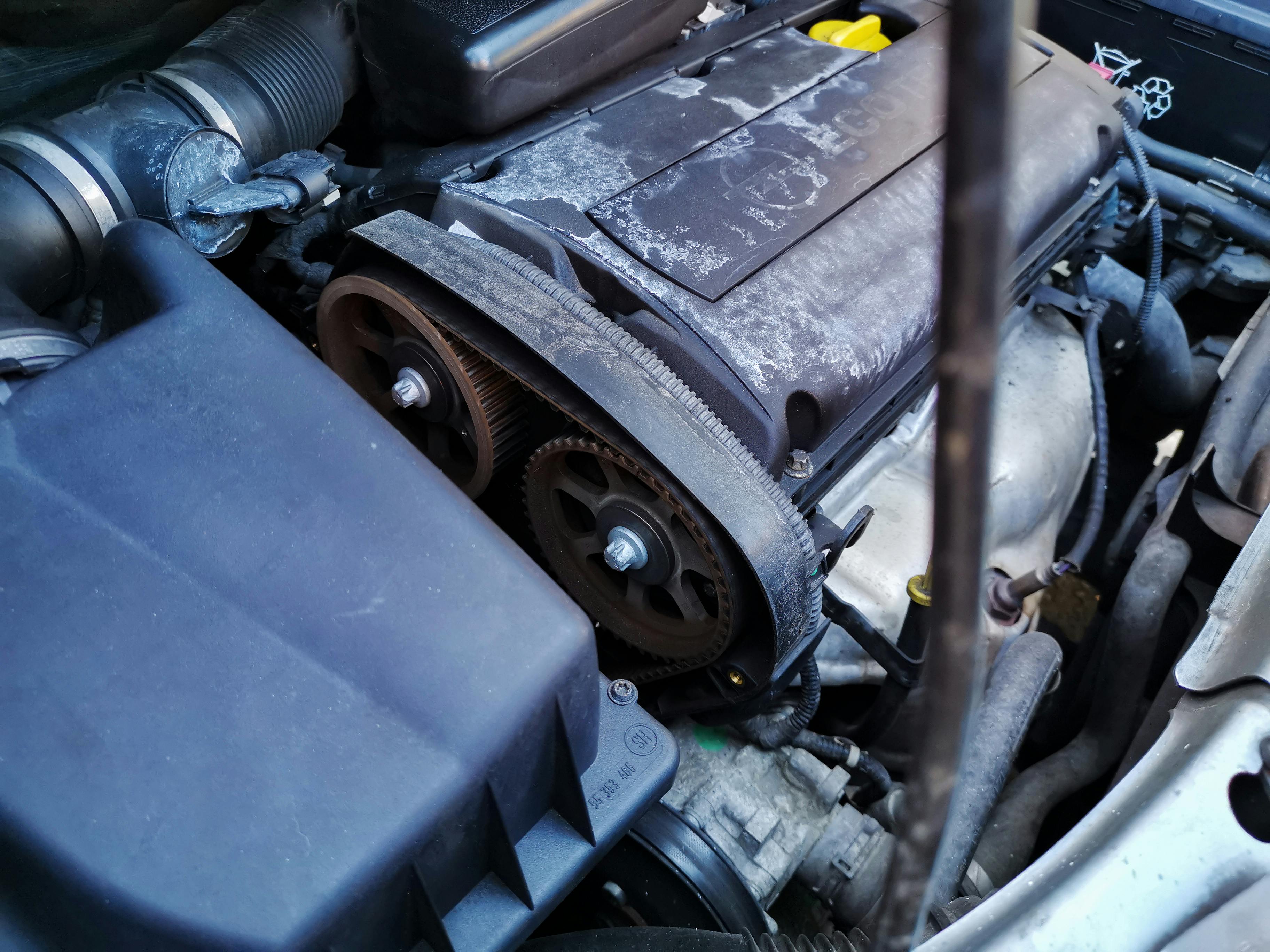
Consider a scenario where a customer pulls into a shop with a 2012 Honda Civic and asks, "How much longer can I push this timing belt?" The car has 127,000 miles on it, and the owner is hoping to squeeze another year or two out of it before replacing it. The honest answer—probably costing $1,200 that afternoon—saves them from a $4,800 engine rebuild down the road.
That's the thing about timing belts and timing chains—most car owners have no idea what they're looking at, and the difference between these two components can literally make or break your engine.
Myth #1: A Timing Belt and a Timing Chain Do the Same Job, So It Doesn't Really Matter Which One You Have
Okay, so technically they do the same job. Both keep your engine's crankshaft and camshaft perfectly synchronized so your valves open and close at exactly the right moment. Without that synchronization, your engine becomes expensive scrap metal. Period.
But here's where people get it wrong.
A timing belt is a rubber belt with teeth on the inside. It's reinforced with fiberglass and Kevlar, sure, but it's still rubber. And rubber wears out. A timing chain is made of actual metal—kind of like a bicycle chain, but way more precise. It's stronger, it lasts longer, and frankly, it's more expensive to manufacture, which is why manufacturers started using belts on some vehicles back in the 1980s to save money.
The problem? When that rubber belt finally gives up the ghost, it can snap with zero warning. Mechanics have had customers call from the side of the highway because their engine just died mid-drive. That's what happens when a timing belt breaks.
A timing chain might make noise—you'll hear a rattle from the front of the engine, usually when you're starting the car cold. That noise is your warning. You get time to plan the repair. You don't wake up one Tuesday morning and find your engine seized.
Myth #2: Your Timing Belt Will Last as Long as Your Car
This one is frustrating.
Every month, customers come in thinking their timing belt is fine because they've never heard of replacing one. Then they're told it's time, and they look like they just heard they need to donate a kidney.
Here's the reality: timing belts have service intervals. Hard stops. Not suggestions—actual manufacturer-recommended replacement schedules. For most vehicles, you're looking at somewhere between 60,000 and 105,000 miles. Some go longer, but not many. Your Subaru? Usually 105,000 miles. Your Toyota? Could be 60,000 to 90,000 depending on the model. Your Honda? Often around 105,000 to 110,000 miles.
You need to check your owner's manual. Not your buddy's manual. Not your cousin's manual. Yours. Because every manufacturer is different, and getting this wrong is expensive as heck.
Here's something people don't understand: your timing belt doesn't care how you drive. It doesn't care if you change your oil religiously or if you're terrible about maintenance. It wears out based on time and mileage. Even if you barely drive your car, that rubber is sitting in your engine bay, baking in the Southern California heat, getting brittle. After about 10 years, even a timing belt with low mileage should be replaced.
Consider a 2008 Honda Accord with only 67,000 miles on it. The owner had driven it maybe 5,000 miles per year, but the belt was cracking. That's just what rubber does in the heat.
Myth #3: Timing Chains Never Need Maintenance
This is where people who own chain-equipped vehicles get cocky.
Don't get me wrong—timing chains last way longer than belts. A lot longer. You might get 200,000 miles or more out of a timing chain if you take care of your vehicle. But "never need maintenance" is false.
A timing chain runs on oil. It's lubricated by your engine oil, just like everything else inside the engine. If you skip oil changes, you're not just hurting your main bearings and camshaft—you're starving that timing chain of the lubrication it needs. Chains have been known to stretch and wear prematurely on vehicles with spotty maintenance histories.
And here's the thing about stretching—when a timing chain stretches, it throws off the precise timing mentioned earlier. Your engine runs rough. You get a check engine light. Eventually, you get valve damage. It's not as catastrophic as a belt snap, but it's not cheap either.
Timing chain tensioners can also go bad. These little hydraulic devices keep tension on the chain. When they fail, the chain rattles around inside your engine. Consider a 2016 Nissan Altima at 98,000 miles with a rattling sound on cold starts. A failing timing chain tensioner diagnosis typically runs about $800 for the repair. Not as bad as a belt replacement on a different vehicle, but still unexpected expense.
So timing chains need respect. They need regular oil changes. They need attention. They're more forgiving than belts, but they're not invincible.
Myth #4: It Doesn't Matter If I Wait a Little Longer Past the Recommended Service Interval
This is the one that really gets people fired up, honestly.
Your maintenance schedule isn't a suggestion from some overcautious engineer who's afraid of liability. Those intervals are based on engineering data and real-world testing. They're conservative, sure, but they exist for a reason.
When you're at 105,000 miles and your Civic's timing belt was supposed to be replaced at 105,000 miles, you're already behind. Every mile you drive after that is a gamble. And unlike other parts of your car, you don't get warning signs. Your timing belt won't send you a text message saying, "Hey, I'm about to snap."
The temptation is understandable. A timing belt replacement isn't cheap. You're looking at anywhere from $400 to $900 depending on your vehicle and what else needs attention while the mechanic's got the front of your engine apart. But compare that to the cost of a bent valve job, a broken piston, or a complete engine rebuild. Now we're talking $3,000 to $6,000. Timing belt failures have been known to turn into $8,000 engine replacements on some vehicles.
Think of it like this: would you rather spend $650 replacing your timing belt on your schedule, or $5,000 rebuilding your engine on the timing belt's schedule?
What You Actually Need to Do
Here's the practical stuff that matters.
First, figure out what you have. Check your owner's manual or ask your mechanic. Do you have a belt or a chain? If you have a belt, write down the service interval. Put it in your phone. Set a reminder.
Second, stick to your maintenance schedule. Not the one you wish you had. The one your manufacturer recommends. That includes your oil changes, because timing chains depend on it.
Third, listen to your car. If you hear rattling from the front of the engine on cold starts, get it checked. If your timing belt is approaching the service interval and you hear any unusual noises, don't wait.
Fourth, find a mechanic you trust. Someone who will tell you honestly whether you need the work done now or if you can wait another few months. And then trust that advice.
Your timing belt or timing chain isn't something to get cute about. It's not something to defer or hope goes away. It's literally what keeps your engine running, and it has an expiration date. Respect that, and your engine will run for hundreds of thousands of miles. Ignore it, and you'll learn an expensive lesson the hard way.
Many car owners learn their lesson at $1,200. Don't be the person who learns it at $5,000.
The Bottom Line
Timing belts and chains do the same job but in completely different ways. Belts are cheaper upfront but need scheduled replacement. Chains last longer but need proper maintenance and attention to warning signs. Neither one is something you can ignore. Check your manual, know your maintenance schedule, and budget for the work accordingly. Your future self will thank you.