Why Car Prices Are Still Stuck: Supply Chain Myths vs. Market Reality in 2024
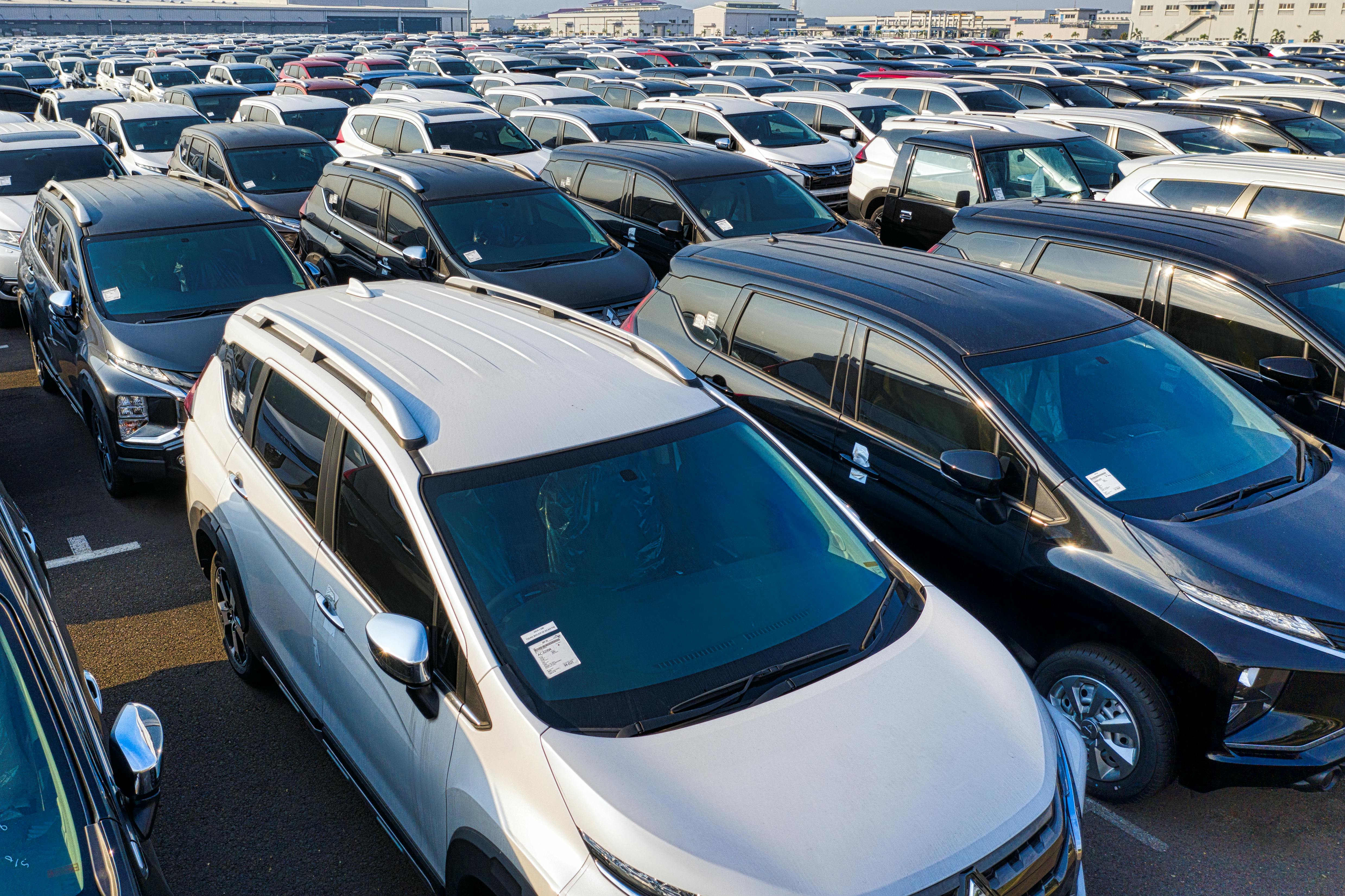
Why are used car prices still stubbornly refusing to drop below a certain ceiling even though we're supposedly past the worst of the chip shortage?
If you've been shopping for a car lately—whether new or used—you've probably felt that familiar gut punch at the sticker price. And if you've been paying attention to automotive trends over the past couple years, you know the supply chain saga hasn't exactly wrapped up into a neat conclusion with a bow on top. But here's the thing that catches most people off guard: the supply chain problems aren't over, they've just evolved. They've mutated. And they're still quietly pulling the strings on what you're going to pay at the dealership.
Let's separate the myths from the actual market mechanics that are keeping prices elevated across both new and used inventory.
Myth #1: "The Chip Shortage Is Over, So Prices Should Be Back to Normal by Now"
This one's half-true, which makes it dangerous. Yes, semiconductor manufacturers ramped up production significantly after 2021-2022's apocalyptic shortages. Yes, automakers stopped losing entire product lines to the shortage gods. But "over" doesn't mean "solved."
Here's what actually happened. Chip supply stabilized, but it didn't fully normalize. Certain critical components,particularly advanced driver-assistance system (ADAS) chips and the processors that run vehicle infotainment systems,remain in tighter supply than others. A manufacturer can source basic microcontrollers relatively easily now. Try getting your hands on the specific semiconductor that powers adaptive cruise control in a 2024 luxury sedan? Different story entirely.
The automotive industry also learned a harsh lesson about depending on a single supplier for mission-critical components. Companies like Tesla and Ford diversified their sourcing, which sounds great until you realize diversification creates its own bottlenecks. When you're buying chips from three suppliers instead of one, you're coordinating with three supply chains instead of one. Coordination is harder. Delays still happen.
And then there's the matter of inventory buffers. Dealerships and manufacturers are now holding extra stock of high-demand components as insurance against future shortages (and honestly, given what they've been through, can you blame them?). That costs money. Someone's paying for that extra inventory sitting in warehouses, and spoiler alert: that someone is eventually you.
Myth #2: "Port Congestion and Shipping Are Back to Pre-Pandemic Levels"
Not even close.
American ports are still dealing with congestion. Los Angeles and Long Beach combined moved over 17 million TEU (twenty-foot equivalent units, the standard container measurement) in 2023 alone. That's near-record levels. The Port of Houston? Seeing consistent backups. And here's what nobody talks about enough: labor shortages at ports mean slower turnaround times for unloading imported vehicles and parts.
Remember when container shipping costs dropped from their insane 2021 peaks? They've climbed back up again. Not to bubble levels, but higher than the pre-pandemic baseline that everyone pretends was normal. A container from Asia to the U.S. West Coast costs roughly 40-50% more than it did in 2019. That's not an anomaly anymore. That's the new operating environment.
For vehicles specifically, this means imported cars (and remember, lots of parts come from overseas, even for domestically-assembled vehicles) still carry higher logistics costs baked into their pricing. That Honda Civic you're looking at? Some of its components traveled from Japan, sat in a port, waited in a shipping queue, then made it overland to the dealership. Every step of that journey costs more than it used to.
Myth #3: "Used Car Prices Are Plummeting Back to 2019 Levels"
They're not, and there's a really interesting reason why that has nothing to do with chip shortages anymore.
Used car prices did cool off significantly from their 2021-2022 peaks. That's real. A used 2019 Honda CR-V that sold for $28,500 in April 2022 might fetch $22,000 today. But compare that to what the same vehicle would've cost in 2019? You're still looking at a $3,000 to $5,000 premium over pre-pandemic pricing.
Why? Because the used car market is now being shaped by something different: the age and mileage profile of available inventory. During the pandemic, people held onto their cars longer. Trade-in volumes dropped. Fleet vehicles that would normally cycle through auctions every three to four years stayed on the road. Now, in 2024, those vehicles are finally hitting the used market, but they're older. A car that would've been four years old in a normal cycle is now six or seven. Higher mileage. More wear. That means lower per-unit value, but it also means there's still scarcity in the premium segments (low-mileage, newer model years).
Plus, interest rates are higher than they were in 2019. That matters. A lot. When someone's financing a vehicle at 7% instead of 4%, they can afford to pay less for the car itself. But dealerships and sellers know this too. So instead of prices dropping to match the lower purchasing power, they've settled into a kind of equilibrium,lower than 2022 peaks, but higher than 2019 baseline. It's the new normal, and it's being reinforced by a supply of used inventory that's still not quite back to pre-pandemic abundance.
Myth #4: "Electric Vehicles Are Getting Cheaper, So Traditional Cars Will Have to Drop Prices to Compete"
This one deserves a nuanced take because it's where automotive trends are getting genuinely interesting.
EV prices have come down. Tesla dropped the price of the Model 3 by nearly 40% at one point, and other manufacturers have followed suit with lower starting prices on electric models. But here's what's sneaky about this: traditional combustion-engine cars aren't dropping prices in response. Instead, they're holding steady or even creeping up slightly in certain segments.
Why? Because supply chain issues hit traditional vehicles and EVs differently. EV batteries require a whole different supply chain (lithium, cobalt, rare earth minerals, specialized battery management systems). While those supply chains have their own problems, they're different problems than the semiconductor shortages that devastated traditional vehicle production. This created an interesting dynamic: traditional vehicles became relatively scarcer during the worst supply chain chaos, which propped up their prices. Now that EV supply has stabilized somewhat, they've been able to compete on price. But traditional vehicles still enjoy residual scarcity value.
There's also a dealer inventory angle here. An average Ford dealer probably has 80-90 traditional vehicles on the lot and maybe 15-20 electric options. That's changing, but slowly. With less inventory diversity in EVs, pricing is more competitive. With traditional vehicles, dealers have more power to maintain margins because there's still healthy demand for the selection available.
The real story: EV prices are dropping toward parity with traditional vehicles, but traditional vehicle prices aren't racing downward in response. They're meeting somewhere in the middle, and that middle is still higher than 2019 pricing.
Myth #5: "Supply Chain Problems Are Purely About Manufacturing Capacity"
Manufacturing capacity is only part of it. The real complexity lives in logistics, labor, and something nobody talks about enough: the concentration of production.
Here's a concrete example. Back in 2022, a guy named Marcus walked into a dealership in San Diego looking for a specific configuration of a 2023 Toyota 4Runner. He wanted the blue exterior, gray interior, all-wheel drive, and the premium audio package. The salesman told him the wait was five months, maybe six. The base price was $56,400, but the build-to-order options pushed it to $61,200. Marcus put down $2,500 to hold his spot in line.
What Marcus didn't understand was that his 4Runner wasn't just waiting for a microchip. It was waiting for a specific combination of components to all arrive at the same assembly plant in Japan at the same time. One supplier's shipment gets delayed by two weeks, and suddenly the whole build gets pushed back. The blue paint comes from one supplier, the gray leather from another, the audio system from a third. Synchronizing all of that across global supply chains is like conducting an orchestra where half the musicians are stuck in customs.
By the time Marcus's truck arrived six months later, the price had actually gone up by another $800 because of a mid-year adjustment from Toyota. His $61,200 order turned into a $62,000 delivery. That extra cost came straight from supply chain disruption propagating through the pricing system.
Labor shortages compound this. Ports need more dock workers. Trucking companies need more drivers. Assembly plants need more technicians. When you can't find enough people to move cars and parts through the supply chain faster, everything slows down. And slow movement of inventory means higher carrying costs, which get absorbed into pricing.
Myth #6: "New Cars and Used Cars Are Moving Independently of Each Other Now"
Nope. They're locked in a relationship, and understanding that relationship is key to understanding why prices are where they are across the board.
New car availability directly affects used car pricing. When new car inventory is tight, used cars become more attractive to buyers. Demand for used vehicles goes up. Prices follow. Conversely, when manufacturers finally get their new inventory levels back to something resembling normal, competition increases, and used car prices have to adjust downward slightly to maintain buyer interest.
But here's where it gets interesting: we're not back to normal new car inventory levels. Not even close. The average dealership in the U.S. has about 50-60 days of supply for new vehicles. Pre-pandemic, that number was closer to 60-70 days, which sounds like the same ballpark until you realize that "normal" is actually considered tight by historical standards. A healthy market should have 80-90 days of supply.
Because new car inventory is still constrained (partly by chip supply, partly by production capacity, partly by intentional dealer strategy to maintain pricing power), used cars benefit from that constraint. Buyers who can't find the exact new vehicle they want often settle for a used model instead. That drives up used car values.
Vehicle technology has also shifted this dynamic. A 2019 car with basic driver-assistance features looks pretty basic compared to a 2023 model with advanced ADAS, wireless software updates, and integrated smartphone controls. That technological gap makes newer used cars more valuable than they would've been in the past, which suppresses prices on older inventory while keeping prices up on newer, more tech-forward used vehicles.
The Real Picture: It's Layered, Not Linear
The supply chain didn't just "break" and then "heal." It fragmented, adapted, and created new inefficiencies in the process of solving old ones. Port congestion evolved. Semiconductor supply diversified but became more complex. Used car inventory aged out and created its own scarcity dynamic. And through all of it, manufacturers discovered they could maintain healthier margins by managing inventory more carefully instead of flooding the market.
Is supply chain disruption still a primary driver of car prices today? Not really, not anymore. It's more of a secondary factor that's embedded into the system. The primary drivers now are labor costs, interest rates, regulatory compliance (especially around vehicle technology and emissions), and basic supply-and-demand mechanics in a market where used inventory is still lean and new inventory is still tighter than historical norms.
The honest answer to why you're still paying more for a car than you would've in 2019 isn't "supply chain," it's "a bunch of factors, some of which are lingering supply chain aftereffects, but most of which are just how the market reorganized itself in response to the disruption." That's less catchy for a headline, sure. But it's more useful if you're actually trying to understand whether car prices are likely to drop further, or if we're looking at a new baseline.
Spoiler: we're probably looking at a new baseline.