Why Loaner Fleet Size Optimization Is Quietly Costing You Deals
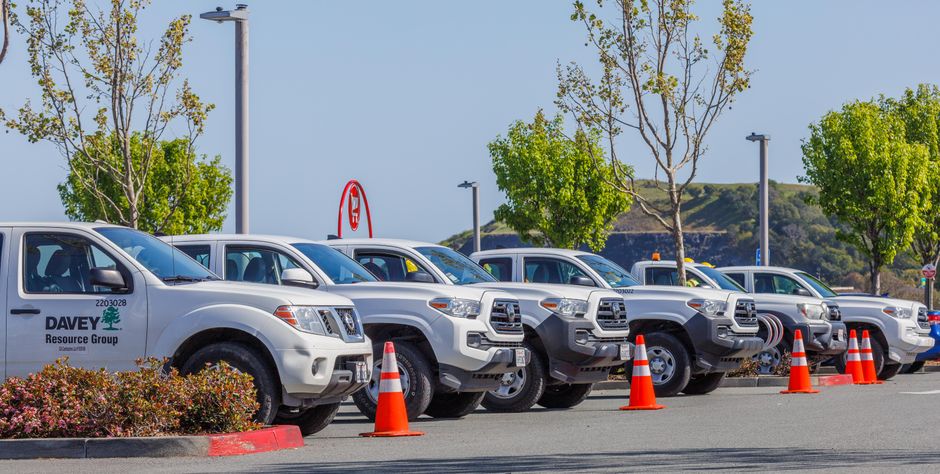
In 1952, a Cadillac dealer in Detroit did something that would reshape the entire industry. He decided to keep a handful of loaner cars on hand so that customers waiting for service wouldn't feel stranded. It was a radical idea at the time. Within a decade, loaners became an expectation, not a perk. Dealerships built them into their business model, their CSI scores, their customer lifetime value calculations. Today, loaner fleet management is so woven into service operations that most fixed ops leaders don't even question whether they're sizing their fleet correctly.
That's the problem.
Most dealerships are either oversizing their loaner fleets or undersizing them. Very few are hitting the right number. And when you miss that target, you're leaving money on the table in ways that don't show up on your P&L until it's too late to fix. This isn't about buying one extra Corolla or selling one you don't need. It's about the cascade of operational and sales decisions that ripple out from a poorly sized fleet.
The Hidden Cost of Too Many Loaners
Start with the obvious math. Let's say you're running a 30-loaner fleet at a mid-size franchise. Average cost per vehicle: $8,000 in acquisition, reconditioning, and setup. That's a $240,000 capital investment sitting in your lot. Insurance, registration, maintenance, tire rotations, oil changes, and depreciation on a vehicle that generates zero revenue? Industry benchmarks suggest you're spending $3,000 to $5,000 per loaner per year just to keep them available.
On a 30-unit fleet, that's $90,000 to $150,000 annually in carrying costs alone.
But here's where it gets painful. Those extra loaners are taking up lot space. Real estate costs money, whether you own the property or lease it. That's square footage you're not using to display fresh used inventory, rotate demos, or stage vehicles for reconditioning. You know what sells cars and generates front-end gross? Sharp used inventory on your lot. Not a 2019 Nissan Altima with 68,000 miles parked out back that nobody looks at because it's designated as a loaner.
The opportunity cost is brutal. A typical used-car operation that's optimized around inventory turn and margin can generate $400 to $600 in gross per vehicle per month in lot rent value. If you're parking 10 unnecessary loaners on your lot, you're forgoing $40,000 to $60,000 a year in potential margin and inventory flexibility.
And then there's the reconditioning workflow hit. Your technician and detail boards are moving slower because you've got too many vehicles in rotation. Shop productivity dips. ROs that could have been completed Friday afternoon don't get finished until Monday. Your service advisor is calling customers on Saturday to apologize for the delay. CSI takes a hit. People remember the inconvenience more than the loaner itself.
The Silent Cost of Too Few Loaners
On the other end, undersizing your fleet is even worse because the damage is invisible until it's catastrophic.
Here's a realistic scenario: You're running 18 loaners at your store. On a Tuesday afternoon, a customer rolls in with a transmission issue on their 2017 Honda Pilot. Multi-point inspection reveals it's a $3,400 job that needs 3 days to complete. Another customer comes in with a blown timing belt. Another with a water pump failure. By 4 p.m., you've got five active service requests that require multi-day turnarounds, and you've got 18 loaners available.
You've got three loaners left for the rest of the week. One of them is a 2015 Hyundai Elantra with a warning light that your technician flagged yesterday. So really, you've got two good units.
The next customer who comes in at 5 p.m. with a sensor issue that needs overnight diagnostics? No loaner. Your service advisor has to have an awkward conversation about a rental car, or they have to offer to knock a few dollars off the service to make the customer feel better about the inconvenience. Either way, you're losing margin or losing a customer relationship moment. Maybe they remember that gap when they're shopping for their next vehicle.
Undersized loaner fleets tank CSI scores in ways that are hard to reverse. A customer without a loaner is a customer thinking about their own inconvenience, not about the quality of the work being done.
And here's the thing that really stings (and I know this from talking to service directors across multiple regions): undersized fleets create bottlenecks that slow your entire service operation. Technicians are waiting for loaners to come back so they can start jobs. Service advisors are rationing which customers get loaners based on some arbitrary internal priority system that creates resentment. Your shop productivity tanks because work isn't flowing smoothly. Days to front-line on used inventory stretches out. Your gross margin per RO drops because technicians aren't working efficiently.
Finding Your Actual Loaner Fleet Sweet Spot
The real number isn't a percentage of your service capacity or a ratio tied to your monthly RO volume. It's based on your specific patterns.
Start by tracking these metrics over a 90-day window:
- Average number of loaners in use per day
- Peak loaner utilization (the busiest day of the week, month, and season)
- Average days-in-shop across all service requests
- Percentage of ROs that actually need a loaner versus those that can be done same-day or next-day
- Current CSI score, specifically the "would you recommend" question tied to loaner satisfaction
Most dealerships discover that their peak loaner demand is maybe 60–70% higher than their average. If you're pushing 8 loaners on an average day and 15 on your peak days, your true fleet size should be somewhere in the 16–22 range. Not 30. And probably not 12 either.
The bonus: tracking this data also reveals which days of the week and which service types generate the highest loaner demand. Wednesday and Thursday tend to be peak days at most franchises. Multi-day diagnostic jobs and major mechanical work consume way more loaners than routine maintenance. Once you see those patterns, you can adjust your service scheduling to smooth the demand curve. Maybe you start pushing customers toward Monday–Tuesday appointments for major work. That naturally reduces your peak demand and lets you rightsize your fleet downward.
The Workflow Problem That Nobody Talks About
There's a management issue baked into this too. Most service departments aren't tracking loaner availability in real-time during the day. A service advisor might not know whether you have a loaner available when a customer walks up until they ask around or check a whiteboard in the back. That kills efficiency.
Some dealerships are solving this by integrating their loaner tracking directly into their service management workflow. This is exactly the kind of workflow Dealer1 Solutions was built to handle. When a technician marks a vehicle as complete and a loaner as available, the service team gets real-time visibility into which loaners are ready to hand out. No confusion. No bottlenecks from miscommunication. Your service advisor isn't overselling availability or scrambling to find a car.
That single operational fix often recovers 5–10% of your lost shop productivity just by removing the friction of not knowing what's available.
The Numbers That Matter
If you're currently running a fleet that feels bloated, cutting it by 15–20% could free up $50,000 to $80,000 in annual carrying costs and lot space value. That's real cash. That's inventory markdown room, technician bonuses, or reinvestment in tools and equipment.
But if you're undersized and that's hurting your CSI, your service advisor satisfaction, and your shop productivity, growing your fleet to the right size might actually add $100,000+ to your annual net fixed ops gross just by improving throughput and customer experience.
The only way to know which direction you need to move is to stop assuming and start measuring.
Pull your 90-day loaner utilization data this week. Stack it against your CSI scores. Talk to your service advisors about the real moments when they've had to turn away a customer or make an uncomfortable call about alternative transportation. Then build your business case. The right fleet size isn't a guess. It's a data point waiting to be found.