Why Service Drive Photography for Upsells Is Quietly Costing You Deals
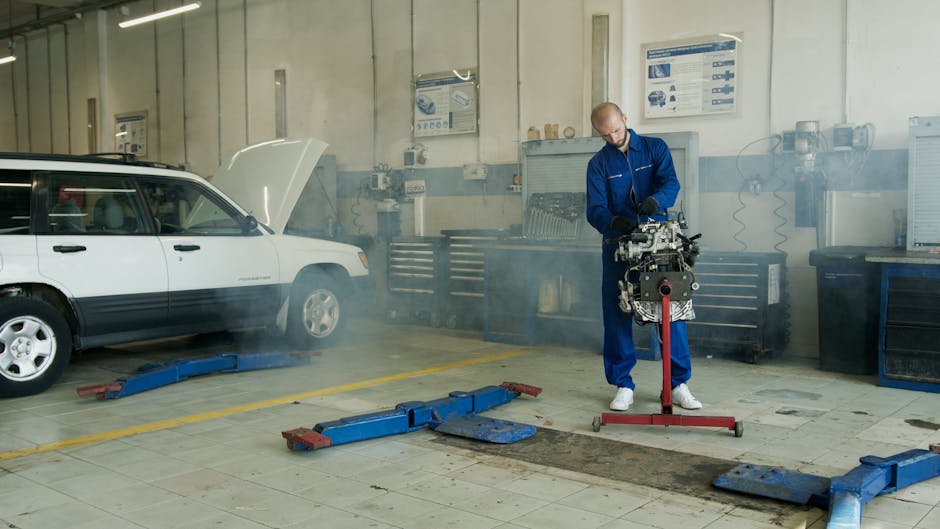
Back in 1955, dealership service departments didn't have cameras. They had clipboard notes, maybe a sketch if the service advisor was feeling thorough. That worked fine when a customer trusted the dealership implicitly and the average vehicle lasted 80,000 miles before it was someone else's problem. Today, you're competing with YouTube mechanics, owner forums, and a customer base that questions everything. So when digital photography became cheap and ubiquitous, dealerships latched onto it as a way to prove what they found, document wear patterns, and build credibility for upsells. Makes sense on the surface.
But here's what nobody talks about: the photo habit is eating into your labor margins and killing your close rate without you even realizing it.
The Hidden Cost of Photo Documentation
A typical multi-point inspection at a solid dealership takes 45 minutes to an hour. That's a technician pulling the vehicle into the bay, running through belts, hoses, fluid levels, brake pad thickness, tire tread depth, checking for leaks, and noting any observations. It's systematic work, and it's billable if you're doing it right.
Now add photography to that workflow. The technician finishes the inspection and has to document it with photos. Not just one photo per finding—most dealerships want multiple angles to "prove the wear" and "show the customer exactly what we found." A brake job with wear comparison shots. Close-ups of a frayed serpentine belt. Under-hood shots showing coolant residue. High-mileage transmission fluid photos (those are popular lately).
Here's the math that most dealership operators aren't tracking: say your shop rate is $150 per hour and your technician spends 15 to 20 minutes photographing, organizing, and uploading images for a single inspection. That's roughly $37.50 to $50 in labor cost per vehicle, and you're not billing the customer for it because it's wrapped into the "free" multi-point inspection.
But that's not the real problem. Not even close.
The Conversion Rate You're Ignoring
Here's the uncomfortable truth that dealerships don't like to admit: customers who receive photo-heavy service recommendations convert at a lower rate than you'd expect, even though the photos feel like they should work.
Think about what happens on the customer side. A service advisor calls with a list of findings. Maybe they text over photos. The customer sees that frayed serpentine belt, the dark transmission fluid, the worn brake pads. Instead of thinking "I trust this dealership's recommendation," they think, "I'm going to check what Reddit says" or "Let me get a second opinion at another shop" or worse, "That looks expensive—I'll wait until something actually breaks."
Photos create friction. They invite scrutiny. A customer might not know how to evaluate your professional judgment, but they definitely think they can evaluate a photograph. They compare it to images from their cousin's truck that's five years older. They find forum posts about how long serpentine belts typically last (and many can go 100,000+ miles). They talk themselves out of the work.
The shops that are actually crushing their service revenue aren't relying on photo evidence. They're relying on trust, relationship, and confident advisors who can explain the finding in plain English without needing visual proof.
The Technician Productivity Drain
Here's another angle nobody measures: your technician is a revenue generator, not a content creator.
When a tech spends 20 minutes per vehicle on photography and image management, you're pulling them off billable time. At an average shop with 8 technicians turning roughly 4 to 5 vehicles per day each, that's 32 to 40 multi-points a day across the team. If each one eats up 20 minutes of photography time, you're losing 10 to 13 hours per day of potential billable capacity. That's a full technician's day of lost productivity, five days a week.
Now, some of that might be absorbed into the multi-point labor itself, but it's still labor that could have been spent on paid work or moving vehicles faster through the bay.
And there's a secondary issue: technicians don't like being photographers. They got into the trade to turn wrenches, diagnose issues, and solve problems. Asking them to compose good lighting, check focus, crop images, and manage file organization is friction they resent. That resentment translates to sloppy photo quality, inconsistent documentation, and photos that don't actually help the service advisor make the case anyway.
What the Data Actually Shows About Photo Upsells
If you pull reports from dealerships using systems that track photo attachment rates alongside close rates, you'll find something counterintuitive: shops with the highest volume of photo documentation don't necessarily have the best service close rates. Sometimes they're lower.
The real predictor of a successful upsell isn't the photo. It's the advisor relationship, timing, and clear explanation of consequence. A service advisor who says, "Your serpentine belt has surface cracks starting to show. If it fails while you're driving, you lose your alternator charge and your power steering. We've got two hours to replace it today, or you can take the risk," is more persuasive than any photo.
Photos work great for compliance documentation, warranty work, and situations where you need to justify work performed after the fact. They're terrible at selling optional maintenance to a customer who doesn't trust you yet.
This is one of those takes that won't be popular with dealership technology vendors. They want you thinking that more documentation, more proof, more touchpoints equals better outcomes. But the operational truth is messier: you're spending real money on a practice that might actually be lowering your close rate by inviting customer skepticism.
The Real Problem Isn't Photography,It's Clarity
Step back. The reason dealerships adopted service drive photography in the first place was to solve a legitimate problem: customers didn't believe the findings. A service advisor said, "Your cabin air filter is clogged," and the customer thought, "That's just upselling."
The photo was supposed to be proof. But photos are evidence, and evidence invites cross-examination. The customer second-guesses it, compares it to other photos online, and decides to get a second opinion.
What actually works is trust. And trust doesn't come from photos. It comes from consistency, transparency in pricing, follow-through on commitments, and advisors who can confidently explain findings without defensive documentation.
Consider a typical scenario: a 2017 Honda Pilot with 118,000 miles comes in for an oil change and multi-point. The tech finds brake pads at 3mm thickness (down from the original 8-10mm). The advisor has two approaches. Approach A: snap a close-up photo, text it to the customer with a message about "safety concern" and recommended replacement at $280 including labor. Approach B: call the customer, explain that their pads are at about 35% thickness, that they'll likely need replacement in 5,000 to 8,000 miles based on their driving habits, and offer to schedule it at their next visit when they're planning to be in the area anyway.
Approach B closes more work because it's not trying to pressure the customer with visual evidence. It's treating them like an adult who's capable of understanding cause and effect.
When Photography Actually Makes Sense
This isn't a argument that all service photography is pointless. There are real uses.
Warranty claims absolutely benefit from photo documentation. Insurance work, collision repair follow-ups, and liability situations require photos. Loaner vehicle condition reports need photos to protect the dealership. That's using photography for its real purpose: risk management and proof of work performed, not sales pressure.
Some shops also use photography for training purposes. New advisors or technicians learn what "worn" vs. "serviceable" actually looks like when they can reference a library of real examples. That's valuable.
Where it breaks down is the assumption that more photos lead to better upsell conversations. They don't. They often do the opposite.
How to Refocus Your Multi-Point Strategy
If your dealership is in the photo-everything camp, consider a reset. Not an elimination, but a recalibration toward what actually moves the needle on fixed ops gross and CSI.
First, standardize your inspection process instead of your photography process. Make sure every technician follows the same multi-point checklist in the same order. Make sure they document findings clearly in your RO system with specific measurements, condition notes, and recommended actions. That's the real value,the data, not the images.
Second, invest in advisor training instead of camera gear. A service advisor who can explain why a cabin air filter matters, what a serpentine belt does, and what happens if it fails is worth more than any photo library. Train advisors to ask diagnostic questions ("How many miles do you typically drive per month?" "Have you noticed any symptoms?") and use that context to build the recommendation. That's consultative selling, and it works.
Third, use photos strategically, not systematically. If a customer specifically questions a finding, offer to show them. Don't send unsolicited photo galleries. If you need documentation for warranty or liability, photograph it. But don't turn every multi-point into a photo shoot.
Fourth, track what actually matters. Measure close rates by recommendation type, not by photo attachment. Track labor productivity without photographing. See if your CSI scores correlate with photo volume (they probably don't). Let the data tell you whether this is working or just consuming time.
This is exactly the kind of workflow Dealer1 Solutions was built to handle,you can standardize your multi-point checklist, capture findings in real time without photo clutter, and give your service advisors a clean, data-driven recommendation to present. The system becomes your proof, not the photography.
The Opportunity Cost is Opportunity Itself
The real cost of photo-heavy service documentation isn't the labor hours, though those add up. It's the conversations you're not having and the relationships you're not building because you're focused on visual proof instead of verbal persuasion.
A service advisor who spends 10 minutes curating photos and organizing files is 10 minutes not building rapport with a customer. A technician spending 20 minutes per vehicle on photography is 20 minutes not mentoring a junior tech or sharing troubleshooting knowledge.
And customers who receive photos of their "needed repairs" are less likely to trust your next recommendation because you've already trained them to be skeptical and comparison-shop.
Your fixed ops gross grows when advisors are confident, technicians are productive, and customers trust the dealership. Photography doesn't directly impact any of those three things. Sometimes it works against them.
The dealerships that are winning right now aren't the ones with the fanciest photo documentation. They're the ones with the strongest advisor-customer relationships, the cleanest operational workflows, and the most transparent communication about what work is needed and why.
If you're spending real labor hours on something that might be lowering your close rate, that's not documentation. That's drag.