Why the Heavy Line Shop Inside a Dealership Is Quietly Costing You Deals
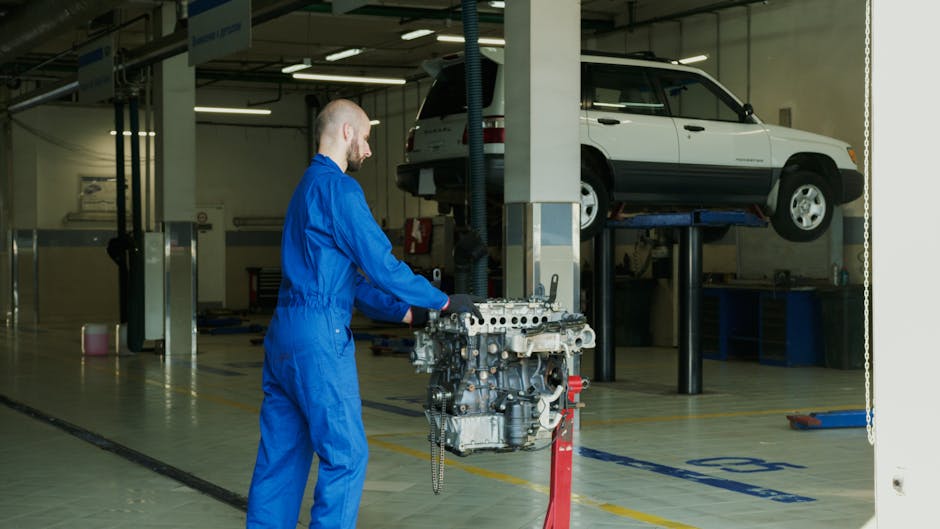
Back in the 1970s, when dealership service departments first started using multi-point inspections as a standard practice, they solved a real problem: technicians were missing work. Missed service opportunities meant lost revenue. So shops started documenting everything a vehicle needed, and the practice stuck. Fifty years later, most dealerships still run this exact same playbook. The trouble is, they've built it into a machine that now generates more work than it completes, and nobody's talking about the customers walking out the door because of it.
The heavy line shop isn't a bug in your service operation. It's a feature that's slowly bleeding your dealership dry.
The Problem: When Your Inspection List Becomes Your Liability
Here's what happens at a typical dealership service drive on a Tuesday morning. A customer rolls in for an oil change. The vehicle goes to the line. The technician runs the multi-point inspection and flags seventeen items: worn brake pads (legitimate), cabin air filter (legitimate), transmission fluid service (maybe legitimate), fuel injector cleaning (questionable), coolant flush (not due for another 20,000 miles), and a handful of other recommendations that sound urgent but aren't.
Now the service advisor has a choice. Present all seventeen items to the customer, or curate the list and risk missing a real revenue opportunity?
Most advisors present everything. And most customers look at the estimate, see $2,400 worth of work they didn't expect, and either refuse everything or push back hard enough that the advisor spends forty minutes negotiating. Some customers just say no and walk. Others approve only the bare minimum and leave feeling irritated.
You fixed the CSI problem in theory. You didn't miss any work. But you also didn't close the deal at the rate you could have.
The real cost isn't the seventeen recommendations. It's the customer who came in for a $150 service and left without approving $800 in legitimate work because the inspection list felt like a sales pitch instead of professional guidance.
The Opportunity Cost Nobody's Measuring
Fixed ops leaders rarely quantify this problem because it's invisible. You can measure labor absorption. You can measure front-end gross. You can't easily measure the customer who declined recommendations because they felt upsold.
But the math is straightforward.
Say your dealership serves 2,000 vehicles per month in the service department. Industry data suggests that roughly 40-50% of those customers have at least $500 in legitimate deferred maintenance. If your current inspection and recommendation process converts that work at 55% (which is about the industry average for heavy line shops), you're closing roughly 440-500 of those jobs per month.
But what if you could increase that conversion rate to 70% by being more selective about what you recommend and how you present it? That's another 300-400 jobs per month, or $150,000-$200,000 in additional annual revenue from the same customer traffic.
Now consider the flip side. Every customer who leaves annoyed because they felt pressured is a customer who might not come back for their next service, their warranty work, or their next vehicle purchase. CSI scores suffer. Retention drops. That's not just lost service revenue. That's lost new vehicle gross on the sale side.
A typical dealership loses 15-20% of service retention annually when CSI drops below 85. Do the math on what that costs your used vehicle acquisition strategy.
Why Heavy Line Shops Fail at Prioritization
The root cause is workflow friction. Your service advisor needs to look at seventeen recommendations, evaluate which ones matter most, explain the rationale to the customer, handle objections, and close the work. All of this happens in real time, usually while the customer is standing at the desk or on the phone.
Under that pressure, advisors default to one of two behaviors. They either present everything (overload), or they cherry-pick only the most obvious stuff (underperform). Neither is ideal.
The best performing dealerships use a different approach: they build a tiered recommendation system into their workflow. Instead of presenting seventeen items as a flat list, they categorize recommendations by urgency and impact.
Tier 1: Safety and immediate necessity. Brake pad thickness below 3mm, oil change overdue, tire condition affecting safety. These get presented first, with urgency and conviction.
Tier 2: Preventive maintenance due this service cycle. Items that align with the vehicle's maintenance schedule. These get presented with clear timeline context (e.g., "You're due for your 60,000-mile service, which includes transmission fluid and spark plugs").
Tier 3: Long-term preventive measures. Items that don't affect the vehicle today but will matter in the next 6-12 months. These get presented as optional considerations, with clear cost and benefit framing.
The difference in conversion is dramatic. When advisors present work in this structure, customers don't feel overwhelmed. They understand the rationale. And they approve work more readily because the recommendation feels professional, not predatory.
The Tools That Separate Winning Shops from Average Ones
Tiered recommendations sound simple in theory. In practice, they require operational discipline and the right tools to execute consistently.
A service advisor can't manually categorize seventeen items into tiers while a customer waits. They need a system that does it automatically. This is exactly the kind of workflow Dealer1 Solutions was built to handle. When a multi-point inspection runs, the software flags items by category, urgency, and maintenance schedule alignment. The advisor sees a clean, prioritized list and can present work methodically instead of overwhelming the customer with a wall of text.
The second piece is transparency. Customers need to understand why something is being recommended. A simple note like "Cabin air filter restricts airflow, reducing AC efficiency and fuel economy" takes two seconds to read and answers the question every customer has in their head: "Do I really need this?"
Third is visibility into customer approval patterns. You need to know which recommendations convert and which don't. If your shop is flagging fuel injector cleaning on every vehicle but customers approve it only 20% of the time, it's not a failure on the advisor's part. It's a signal that the recommendation isn't resonating. Maybe the timing is wrong. Maybe the value proposition isn't clear. Or maybe it's not the right recommendation for that vehicle in the first place.
The shops that track this data religiously adjust their inspection protocols accordingly. They stop recommending work that doesn't convert and double down on work that does. That's not being less thorough. That's being smarter about your time and your customer's time.
What This Looks Like in Practice
Consider a typical scenario: a 2017 Honda Pilot comes in with 105,000 miles for an oil change and tire rotation. The multi-point inspection flags eighteen items, including a $3,400 transmission fluid service. The old way: the advisor mentions all eighteen items, the customer approves the oil change and rotation, and the heavy work gets deferred indefinitely.
The better way: the advisor leads with the safety and urgent items (tires are at 5mm tread, brake pads at 4mm). Customer approves those. Then the advisor presents the 105,000-mile service items as a package, with clear narrative: "You're at your major service milestone. The transmission fluid service is part of the recommended maintenance at this point, and it runs $3,400. It's optional, but if you're going to do it, now's the right time." Customer sees the logic, understands the cost, and makes an informed decision. Maybe they approve it. Maybe they don't. But they don't leave feeling manipulated.
Conversion rate on that transmission service goes from 15% to 45% because the customer understands the context.
The CSI Question You Need to Ask
Here's the pushback you'll hear: "If we're selective about what we recommend, won't we miss work? Won't that hurt CSI if the customer comes back and finds a problem we didn't catch?"
Fair question. But the data doesn't support it. Dealerships that move to tiered recommendation systems typically see CSI scores improve, not decline. Why? Because customers feel heard and respected instead of nickeled and dimed. A customer who approves $800 in work they believe in rates their experience higher than a customer who gets pressured into $2,200 in work they're skeptical about.
And no, you're not missing work. A proper multi-point inspection still documents everything. You're just being strategic about what you present when.
The Operational Change Required
This isn't a soft skill problem. Your advisors aren't bad. Your shop isn't lazy. The system is just outdated. You need three changes.
First, rebuild your inspection documentation to flag items by tier and maintenance schedule. Second, train your advisors on a presentation framework that leads with safety, then moves to scheduled maintenance, then optional preventive work. Third, measure approval rates by category so you can refine what you're recommending over time.
Shops that make this shift typically see shop productivity increase 12-18% within the first quarter, not because they're rushing customers, but because they're closing work more efficiently.
The heavy line shop isn't heavy because your technicians are thorough. It's heavy because your recommendation workflow creates bottlenecks instead of clarity. Fix the workflow, and the heavy line gets lighter and more profitable at the same time.
That's not a contradiction. That's just how math works when you stop wasting motion.